Legends of Japanese Mythology: Meet the Heroes, Spirits, Monsters, and Yokai of Japanese Folklore (Wide Eyes Editions) Pre Order
Publishing date: September 1, 2026
Dark Tales from Japan: Japanese Horror Stories of Yokai, Ghosts, and the Supernatural (Adams Media) Pre Order
(The above are affiliate links, if you order from there I’ll receive a small comission at no cost to you)
Opening:
Two little boys are traipsing along a mountain path when they come across a dead bird. One boy accidentally touches a wing with his shoe and the contagion starts. Fingers cross. The child who is now actively being contaminated, makes a circle with his thumbs and forefingers and holds it out. His friend stoically raises his hand and chops through it, calling out: “Engacho!”
And just like that, the invisible contamination is stopped, they are protected. Bad luck cut.
In today’s episode, I’ll tell you about this little protective spell, as well as other Japanese childhood incantations to call magic, send pain fleeing, ward of thunder and lightning, and to make absolutely certain a promise is never ever broken.
Intro:
Hey hey! this is Thersa Matsuura and you’re listening to Uncanny Japan. The place where I talk about all the more obscure parts of Japanese culture. Be it weird creatures, interesting superstitions, or creepy tales.
Hey! I have two new books now up for pre-order. Legends of Japanese Mythology by Wide Eyed Editions is a middle grade book with fifty profiles of legendary people and mystical beings: ghosts, yōkai, and mythological biggies. Release date: September this year, 2026.
And then, Dark Tales from Japan: Japanese Horror Stories of Yokai, Ghosts, and the Supernatural from Adams Media. This one is decidedly not for children. It even has a trigger warning. Lots of them. I mean, it is horror. Its publishing date is March of 2027. So next spring.
But if you’re interested in either of those (or both!), pre-sales are incredibly important for writers. And I’d be so, so grateful. I’ll put links up on the Uncanny Japan website. At the top of the transcript for this episode.
As always, Ad free versions of the show are available to patrons for $5 a month and up tiers. You’ll get other content — Bedtimes stories, videos, regular patreon-only blog posts — too.
Pod:
Today’s episode is about the magic words of daily life, especially among children, but I have another show I’m working on about the more formal side of Japanese sacred speech — magical words and powerful phrases recited in rituals or used to address the kami (spirits). That’s also really interesting. A kind of Part Two. But first…Part One. Children’s Magic.
I’ve got a question for you. Full disclosure, I’m solidly Gen X, so when I was a kid growing up on the playground we had this thing called cooties. Looking back, it was the silliest, most hilarious, kind of mean thing ever.
If you accidentally touched someone who you thought was gross or maybe you didn’t especially like this person or, hey, maybe DID especially like this person, you might catch “cooties”. God forbid. It was like this pretend contamination.
So my question is: does anyone remember this? Am I the only one who ran around before the first bell rang with a magic marker administering “cootie shots”? Which was basically, drawing on a friend’s forearm and chanting: “circle circle dot dot dot, now you have your cootie shot.”
I was doing god’s work. Vaccinating fellow classmates against the unfathomably yucky cooties. For the rest of the day, if a person with the cooties shot accidentally touched (or was touched by) a person who was deemed to have this mysterious “whatever”, they were safe. Merely, slide up your sleeve and reveal the magic protecting power of circle circle dot dot dot. And it was free, too.
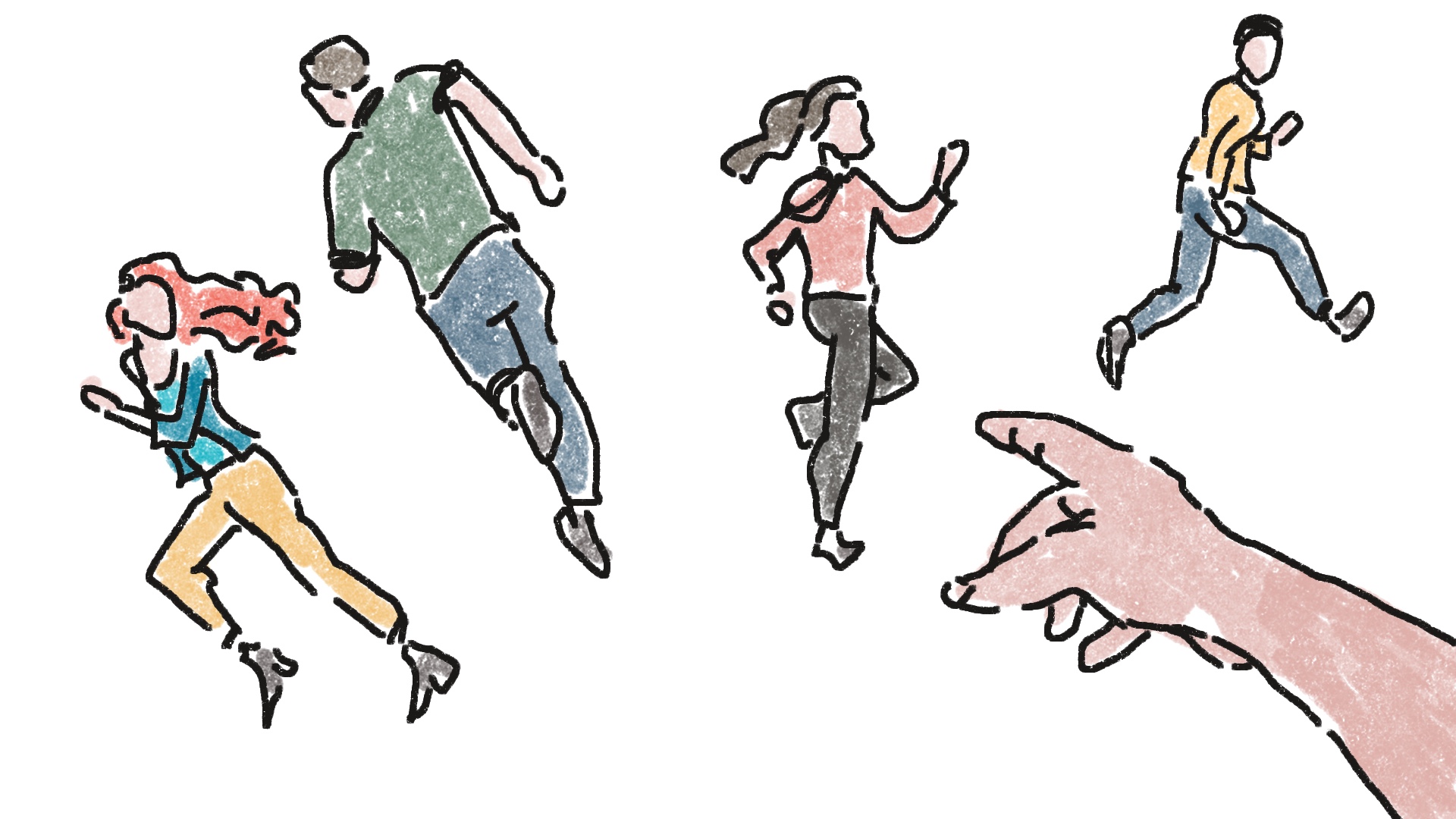
Is anyone else’s brain – other than mine – wasting precious space on this memory? And more importantly are there cooties now? It seems to me that kids these day are much more mature than we might have been. We were feral little things, figuring out life without the internet, one cootie shot at a time.
Thinking about it: I’ve heard of “the ick”. Cute. Don’t know what it means. And “cringe” or “cringey” also cute. But it just means what it means. Then there this thing called, skibidi? What the hell is skibidi? I love it, by the way. I’m just not sure what or why it is. Is it scary? Is it 21st century cooties? Is there a vaccination for it? And could I invent one and become the hero of Generation Alpha?
That said, I think we all can agree that children are wondrous little creatures who live in a world filled with magic. And when they have some free time, they create their own little verbal charms and incantations and gestures that they pass along to one another like a secret society.
Back on topic. I really thought for the longest time, the cooties thing was just another bit of deep south cultural weirdness. Imagine my surprise in Japan the first time I heard engacho!
My son and his friends playing out side. The screen door was open. Suddenly I hear the word “engacho!” shouted and the sounds of children freaking out. I look over to see one little boy make a circle with his hands and another very ritualistically use his hand to chop through it.
I’d soon learn that evidently, *someone* didn’t clean up after Cha Cha Maru (our beagle) and that first kid saw it or stepped near it and felt the need to call out engacho and get cleansed from his near miss. So not exactly cooties, but a childhood chant to ward off impure things. Kegare in Japanese.
Kegare is a whole ‘nother can of (could be literal) worms. I think there’s an episode in there. Kegare is basically at the heart of Shinto (as Shinto is about purifying and protecting against such filth). Kegare is also present in many of the early myths of Japan. But I’ll stop here and do a longer show about filth later. Because I’m sure you all really, really want to hear about that. I’m being serious.
So the idea is that if someone touches something dirty or unlucky it can spread. I listened to a newscaster saying her and her friends always called out engacho when they’d see a crow’s feather on the ground. They thought crow’s feathers were bad luck. Imagine that. I collect them. I’d say they aren’t bad luck, but then again, we just had an earthquake, two typhoons and my water heater broke. So…
So this yuckiness or unluckiness can spread and needs to be stopped. And in that way it’s like cooties. Engacho is a magic word that prevents the spreading and protects you.
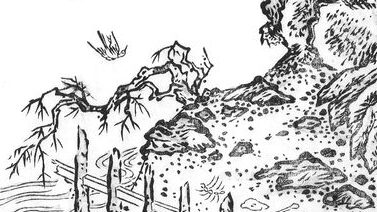
Protective signs or gestures aren’t new either. There is a 13th century picture scroll called Heiji Monogatari Emaki, specifically the Shinzei Scroll, that depicts the aftermath of the Heiji Rebellion. In the image, the severed head of Shinzei who was a powerful monk/scholar/advisor is being displayed and carried through the capital as a war trophy and proof that he’s really dead. Gruesome, right?
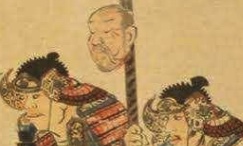
But if you look closely — not at the cut off head, weirdo — but at the people looking on, you’ll see that some of them are either crossing their fingers or making some sort of protective hand gestures. This isn’t engacho exactly, but it’s the same vibe. It’s believed that these hand and finger gestures were done to protect against death pollution, spiritual pollution, or just bad luck from gazing at a decapitated head for too long.
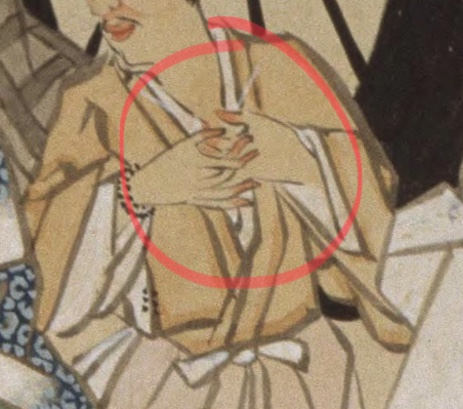
Back to engacho. If you ask Japanese people — and I asked a lot — some know about it and others have no idea at all. I was surprised. There are many local variants of the word as well.
In and around Osaka you might hear: “Bibincho” used. Then in the Kyoto region it would be the hilarious and fun to say: “bebenjo kanjo kagi shimeta!”
There are also loads of different ways to perform this little act of cleansing yourself or making a protective barrier. I’ll give you two popular ones.
The first, let’s say a kid touches something unclean or gross, or maybe just sees it, then he – as well as his other friends – quickly shout “engacho” and cross their middle and index fingers, like we’re used to doing for good luck. This you’ll see in the manga/anime Jujutsu Kaisen, by the way. Note: because children are goofballs, they’ll sometimes cross their arms and legs as extra protection against something really nasty. Like dog poop.
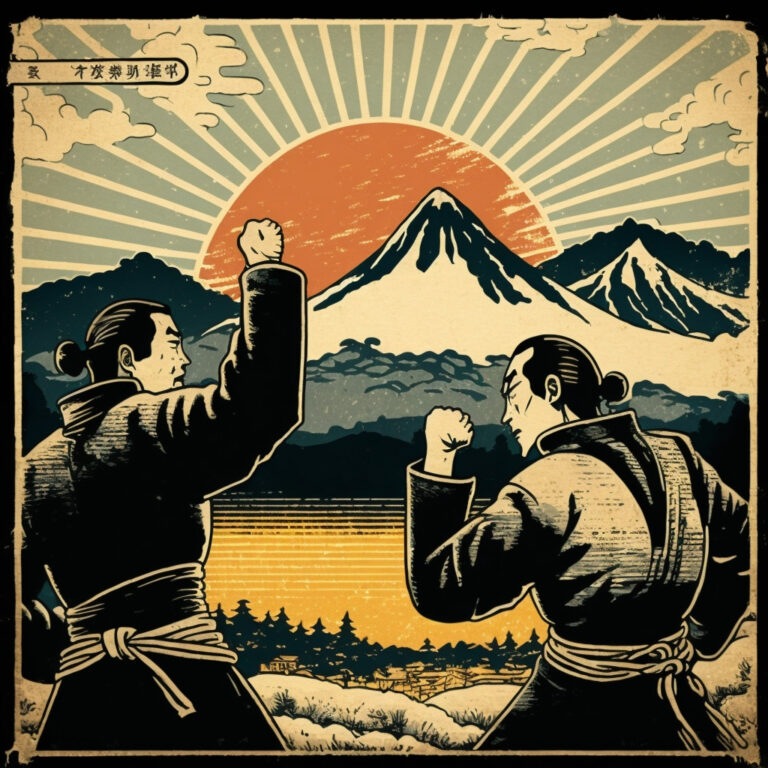
Another one is to place your thumbs together and your index fingers together to make a big oval. A second person will use their hand to slice through that, saying engacho as they do, thus banishing the contamination.
Now if this one sounds familiar, you might have caught it while watching one of my favorite Ghibli movies, Sen to Chihiru no Kamikakushi/Spirited Away. I haven’t seen the English version but in the Japanese one there’s a scene where Chihiru makes Haku eat a bitter dumpling and he spits out something that looks like a black caterpillar. Chihiru then steps on it and squishes it. The Kamaji says “Engacho Engacho!” and Chihiru makes a circle with her thumbs and index fingers. Kamaji then says “I cut it” and chops through the circle. Safe!
So what does engacho mean? Here are couple possibilities.
1) According to a certain historian named Yoshihiko Amino, “En” would mean connection or ties, but also using a different character: pollution or defilement. And “Cho” is an abbreviation of the onomatopoeic word “chon,” meaning “to cut” something. So cutting ties or cutting the defilement. En ga chon to kireru. Cutting the ties, defilement.
2) Other theories suggest it is a corruption of “inga no shō” the Buddhist philosophy of cause and effect or karma. There are different translations but something like: the nature of one’s karmic fate or that unfortunate karmic state.
But no one really knows. So next time you come across some roadkill you can break out the old engacho.
Okay, let’s move onto another magical phrase. Let’s say you hear thunder rumbling in the distance and you want to make sure you stay safe and don’t get suddenly struck by lightning. Which happens. Then you would say: Kuwabara kuwabara. Or Mulberry field Mulberry field.
This one has some history, too. And, of course, differing theories on how it came about. First there is a legend — from China actually — that mulberry trees are never struck by lightning. So there you go. As simple as that. You hear thunder, see lightning and protect yourself by calling out kuwabara kuwabara. The lightning thinks you’re a mulberry field and stays away.
Or related, that sericulture farmers chanted it because the mulberry fields were so important to their line of work and they needed them to be safe. Silkworms eat a lot of mulberry leaves.
But there’s a more detailed explanation, too. There was a brilliant Heian Era scholar/politician named Sugawara no Michizane. He was exiled after some court intrigue and ended up dying. After his death all kinds of disasters struck Kyoto, even great bolts of lightning at and around the court. It was thought that Sugawara no Michizane’s spirit had become an onryō — vengeful spirit — and was wreaking havoc on everyone.
Now of all the places struck by lightning one, a place called Kuwabara was not. This Kuwabara was once owned by Sugawara no Michizane. So people thought: surely he wouldn’t strike his own land. So why not shout out the name. It’s also said the people living there used the spell and indeed lightning never struck.
Then there is another story about a place in Kyoto called Kuwabara-cho. And how one day, a thunder being (think raijū) fell into the well called Kuwabara i or Kuwabara well and the villagers covered it and trapped the creature. In order to be released the thunder being promised to never again strike that place.
Later when thunder was heard, people would say Kuwabara Kuwabara to remind the thunder beast of its old promise. And it worked.
Where it was originally used to ward off lightning and thunder. It came over time to refer to any kind of bad luck or sudden disaster. Almost like a Japanese version of Knock on wood.
And this phrase, too, can be heard in Metal Gear Solid 3 when Colonel Volgin, an electricity-wielding villain says it. In English it’s more Kuwabara Kuwabara. But it’s kind of an inside joke. And the only time he doesn’t say it, gets fried by lightning. I hope I didn’t spoil that for you.
A related magical phrase is tsuru kame tsuru kame. Or Crane tortoise. Crane tortoise. These are both very lucky animals. A crane is said to live 1000 years and a tortiose 10,000 years. Tsuru wa sennen, kame wa mannen.
And by calling out tsuru kame tsuru kame you warding off bad luck. It’s a jinx buster. It neutralizes bad omens. Again, a little similar to knocking on wood.
So let’s say you having a good time with friends and someone says something like: Oh you’re going hiking in Hokkaido. I hope a bear doesn’t eat you.
To which you would say tsuru kame tsuru kame. And tell that person, no souvenirs for you!
Where kuwabara kuwabara is typically associated with thunder and lightning but can be used for other things. Tsuru kame tsuru kame is more flexible. Hey, I heard your partner is sick. I hope it doesn’t get worse. Tsuru kame tsuru kame!
Side note: I’ve never heard this one used before. So it does have a kind of oldish feel to it. It does show up in literature, rakugo, maybe certain families use it, certain areas in Japan.
If someone mentions death or something unlucky just blurt out tsuru kame tsuru kame to overwrite the inauspiciousness. Cancel that. Don’t jinx it. See if anyone looks at you like you’re out of your mind. Or thinks you’re very clever.
Let’s talk about keeping promises. We’re going to get morbid here for a moment. I’m sure all cultures have little children’s chants about making and keeping a promise. I grew up with, cross your heart and hope to die and stick a needle in your eye.
That’s dark. But, let’s go darker.
In Japan there is the pinky swear yubikiri genman where you hook your pinkies with the person your promising with and kind of shake up and down as you both chant:
“yubikiri genman, uso tsuitara hari senbon nomasu. Yubi kitta!”
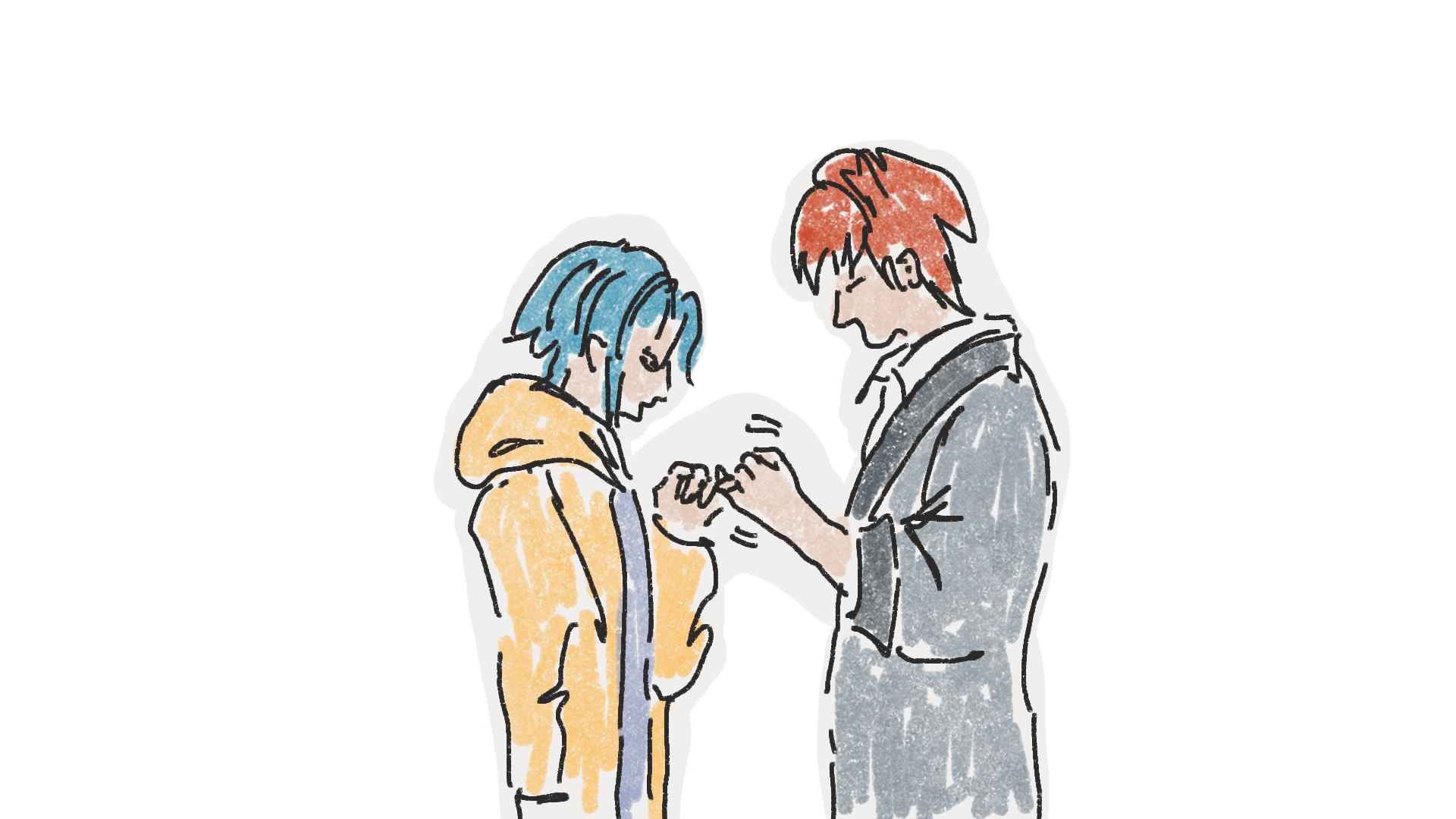
On that last line: “yubikita!” You pull your fingers away from each other.
A simple literal translation is something like:
Finger cut, ten thousand fists, If you lie, swallow a thousand needles. Fingers cut!
But what it really means is more like:
Cut or sever your finger, beat you with ten thousand punches, if you lie (or break your promise), I’ll make you swallow a thousand needles.
And you thought the whole needle and eye thing was bad.
There’s a theory that it came about during the Edo Era as all the best stuff did, in the pleasure quarters, and courtesan culture.
There was a thing where a courtesan might demonstrate her passion and love toward a favored customer by cutting off part of her little finger. A kind of proof of devotion. Sometimes it was just cutting some of her hair or writing blood oaths, maybe a tattoo or piercing the skin, maybe removing a fingernail. Or the true way to show your love…cut off part of your pinky — just that first joint — and send that to the man you love.
And I read this in Japanese in a couple places that there were actually people who would procure in whatever way necessary the cut pinky fingers from corpses or to sell them to courtesans to use.
So I read that a couple times, so I mention it, but it certainly seems like that would be easy to disprove. You send your favorite customer a piece of a severed little finger from some unknown dead person, declaring your never ending devotion. He’s moved to tears, comes to visit you, holds up your dainty hands to cheeks only to realize, you have all your fingers. It’s not like those things grow back. Like ears. We all know ears grow back.
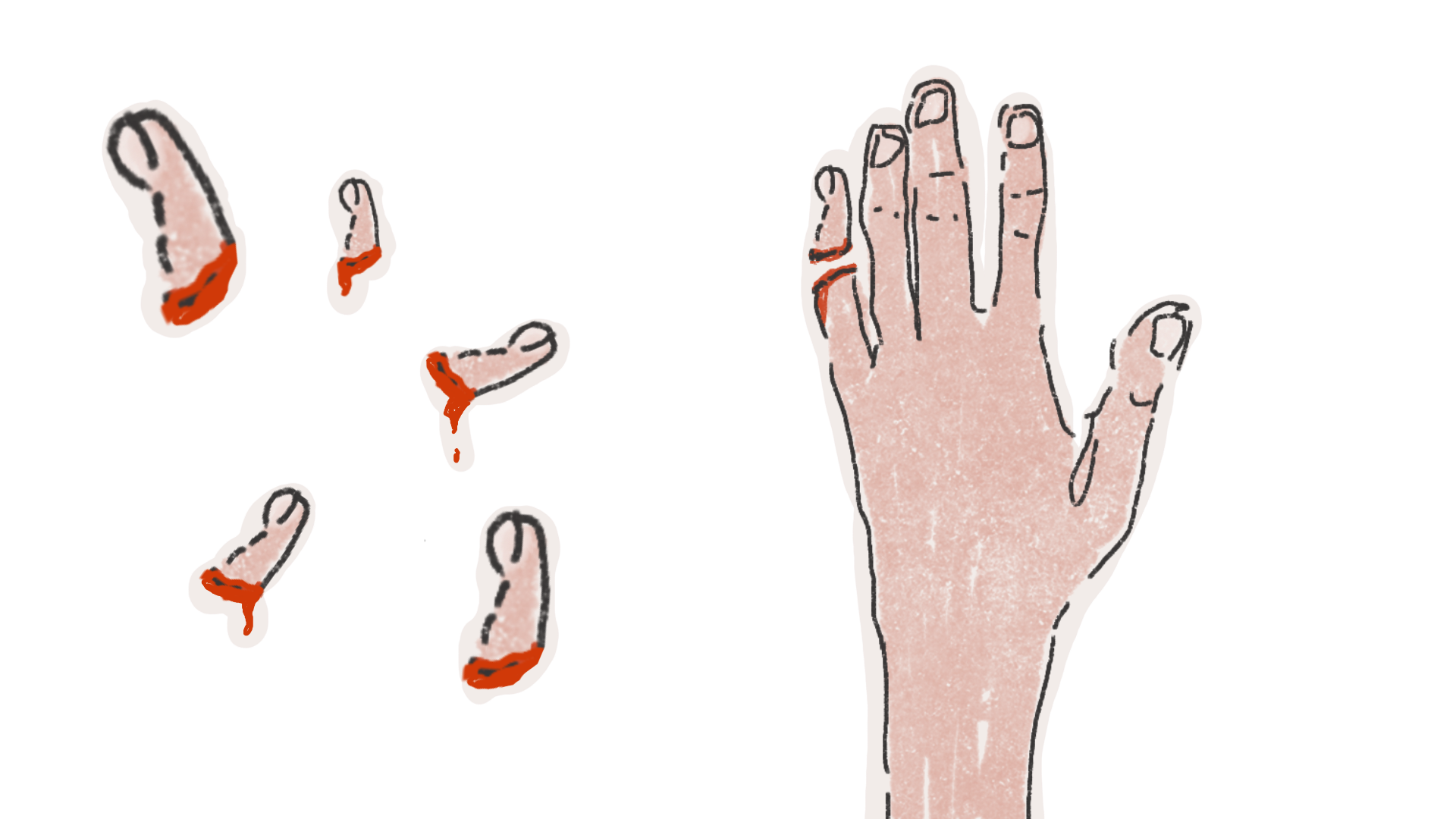
Oh, wait. I think I figured it out. Okay, maybe if the courtesan wants to send this act of devotion, why limit herself to one guy? If her only chance to leave the dreaded, syphilis-ridden hell hole of a pleasure district is a man of means paying for her to leave, then why put all your proverbial eggs in one basket. Or severed pinkies in one, um, envelope.
Cut the finger, but also purchase about five more, then send them all to different wealthy men and hope that ONE will be Mr. Right. When any of them visit, they’ll see the wound, they assume they have the real finger. But two hours later, another customer shows up and assumes the same thing.
Wow this is morbid. Brilliant, but morbid.
Anyway, I read that it didn’t happen in all the pleasure quarters, only bigger ones like in Edo, Kyoto, Osaka, Otsu, Fushimi, Nara, and Sakai. Smaller places catered to travelers, so since there weren’t as many regular customers they didn’t do this.
Remember I talked about the writer, artist, tobacco salesman and lover of the pleasure district, Santo Kyōden in episode 191, The Ghost Actor Kohada Koheiji? Well he wrote a story in 1791 that had a scene with a courtesan cutting her finger in just this way.
So anyway, want to make a promise. Yubikiri genman uso tsuitara hari senbon nomasu. Yubi kitta!
So let’s end on something lighter, cuter,
Another fun incantation is Chichin Pui pui, Sounds adorable right?
This one is used by parents to their children to muster up some magic and make some small injury stop hurting. It’s often used with itai no itai no tonde ike! Pain pain fly away!
These I’ve heard and used tons through the years.
But I only now learned that chichin pui pui isn’t just a nonsense phrase. There’s a longer phrase that is: chichin pui pui, goyo no ontakara
which is translated as “ treasure of the age, treasure of the reign, or treasure of the world” meaning: something precious in this world. Or more modern still: “there there little treasure of the world.”
Isn’t that a sweet thing to say to a child?
There’s the often repeated story of Kasuga no Tsubone, the 17th century nursemaid to the third Tokugawa shogun, Iemitsu, and how she would say that phrase to him when he cried or when she wanted to encourage him. It could have been a slightly different variation: chichin buyū goyo no ontakara.
And that’s not all. You’ll also hear chichin pui pui used like abracadabra or hocus pocus. Not to get rid of pain, but when someone’s doing a bit of sleight of hand or magic. Right before you make the rabbit disappear or in our case at the end of the show when you make everything go away.
Chichin pui pui!