Uncanny Japan logo

Japanese Myths, Folktales, Folklore and Language

Episodes

Children’s Day Iris Baths and Golden Boys (Shobuyu and Kintaro) (Ep. 51)

In this episode, I explore the traditions of Kodomo no Hi (Children's Day) in Japan - from the ancient practice of iris baths (shōbuyu) that promise health and strength, to the legendary tales of Kintarō, the Golden Boy raised by a mountain witch. Join me as I share what I've discovered about these beautiful May 5th traditions that have been passed down through generations.
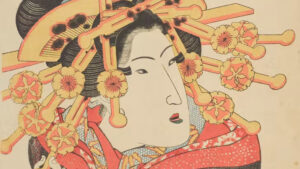
Japanese woodblock print of Kintaro and his mother, a woman with long dark hair holding a child, with Japanese characters on the left.

Story Time – Sand Walls, Paper Doors (Ep. 50)

I'm really happy to say that this is my 50th episode of Uncanny Japan. I want to read a short story that's really dear to my heart. It's the short story that got me my book deal, my agent, and my best friend. Also, yokai, lots of yokai.
Shoji paper window

Close Encounter With An Amabie (Ep. 49)

An amabie is a Japanese yokai that is said to have predicted a plague and then encouraged people to share its image to protect them from that previously predicted plague. Or something like that. The amabie has recently been re-remembered all over Japanese social media with people posting their own adorable depictions of that long-haired, beak-faced, three-footed creature and wishing the current plague (Covid-19) to go away.
Amabie

The Kappa’s Fart (Ep. 48)

A kappa is a  small, scrawny, aquatic yokai with a parrot-like beak, a tortoise-style shell on its back, and an indentation on the top of its head full of water. They're found in rivers, lakes, ponds, and even coastal areas. But what do they do?  While recently kappa have been rebranded to be very kawaii, that hasn't always been the case. Listen to the newest episode of Uncanny Japan to find out how heinous these slimy critters can be. 
Kappa

The Guest Room Child (Zashiki Warashi) (Ep. 47)

During sleep paralysis have you ever the feeling of a ghost child crawling on top of you? If so, you've probably experienced a zashiki warashi (Guest Room Child). But don't worry, they're not bad. In fact, they're the bringer of good luck and fortune.

#Uncannytober: Oct 10

Drawing of Zashiki-Warashi, a girl with long black hair, large dark eyes, and red lips, wearing traditional clothing with a background filled with handwritten text.

Kanashibari: Sleep Paralysis and the Pillow Flipper (Ep. 46)

Have you ever woken up frozen, unable to move or speak? You can hear and feel everything, but you're completely paralyzed. In this episode, I explore kanashibari—Japanese sleep paralysis—and the freaky pillow-flipping yōkai thought to cause it.
Statue of fudo-miyou, a fierce deity with a dark blue face, yellow eyes, fangs, and curly hair, holding a sword, surrounded by a vibrant orange flame backdrop.

Osechi Ryōri: Lucky New Year Foods in Japan (Ep. 45)

Akemashite omedetō. Happy New Year. I'm surrounded by moving boxes in my new creaky house, but I want to share Japan's amazing New Year's food tradition—osechi ryōri. These lucky dishes are prepared days ahead and served in beautiful stacked jūbako boxes.
osechi

Haunted Artifacts (Tsukumogami) (Ep. 44)

In Japan when an inanimate object reaches its 100th birthday and perhaps it was mistreated, or lost, or thrown away, it gains a soul and might possibly start playing tricks on people. This is called tsukumogami, or haunted artifacts. In this episode of Uncanny Japan, I talk about the tsukumogami and some traditional ones you could run across on a dark spooky night.

#Uncannytober: Oct 9

Tsukumogami
1 16 17 18 19 20 24

About The Uncanny Japan Podcast

Speculative fiction writer, long-term resident of Japan and Bram Stoker Award finalist Thersa Matsuura explores all that is weird from old Japan—strange superstitions, folktales, cultural oddities, and interesting language quirks. These are little treasures she digs up while doing research for her writing.

© Copyright 2026 Uncanny Productions


Buy Me a Coffee at Ko-Fi